Molybdenite has a layered atomic structure in which a sheet of molybdenum atoms is sandwiched between two sheets of sulfur. The bonds between the molybdenum and sulfur atoms are very strong.
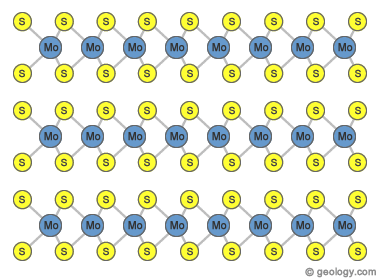
These S-Mo-S layers are stacked one on top of another, but the bonds between the layers are very weak. The bonds between the layers are so weak that light pressure can cause them to slide past one another – this explains the perfect and fragile cleavage of molybdenite. As a result, molybdenite has a slippery feel and a lubricant quality that is very similar to graphite.
Finely ground molybdenite is used as a solid lubricant to reduce the friction between sliding metal parts. Ground molybdenite is also used as an additive to some types of high-performance grease.