The earliest people who worked with glass had no control over its color. Then, through accident and experimentation, glass makers learned that adding certain substances to the glass melt would produce spectacular colors in the finished product. Other substances were discovered that, when added to the melt, would remove color from the finished project.
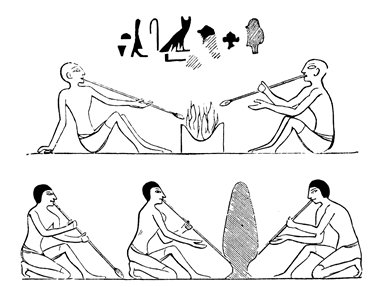
Egyptian glass blowers: As early as 3500 BCE, the first true glasses were being made in Mesopotamia and Ancient Egypt. Beads and small blown-glass vessels were some of the earliest objects made with colored glass. Early glass artists were always experimenting to improve their glass and the objects that they produced. Image copyright iStockphoto / ilbusca.
The Egyptians and Mesopotamians both became experts at the production of colored glass. In the eighth century, a Persian chemist, Abu Musa Jabir ibn Hayyan, often known simply as “Geber,” recorded dozens of formulas for the production of glass in specific colors. Geber is often known as the “father of chemistry.” He realized that the oxides of metals were the key ingredients for coloring glass.