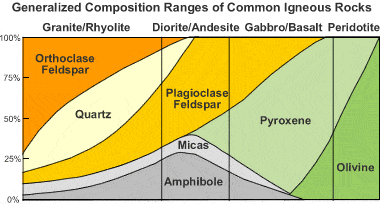
Diorite and andesite are similar rocks. They have the same mineral composition and occur in the same geographic areas. The differences are in their grain sizes and their rates of cooling. Diorite crystallized slowly within the Earth. That slow cooling produced a coarse grain size. Andesite forms when a similar magma crystallizes quickly at Earth’s surface. That rapid cooling produces a rock with small crystals.
Uses of Diorite
In areas where diorite occurs near the surface, it is sometimes mined for use as a crushed stone. It has a durability that compares favorably to granite and trap rock. It is used as a base material in the construction of roads, buildings, and parking areas. It is also used as a drainage stone and for erosion control.
In the dimension stone industry, diorite is often cut into facing stone, tile, ashlars, blocking, pavers, curbing, and a variety of dimension stone products. These are used as construction stone, or polished and used as architectural stone. Diorite was used as a structural stone by the Inca and Mayan civilizations of South America and by many ancient civilizations in the Middle East.
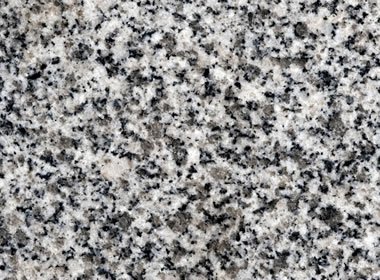
In the dimension stone industry, diorite is sold as a “granite.” The dimension stone industry uses the name “granite” for any rock with visible, interlocking grains of feldspar. This simplifies discussions with customers who do not know how to identify igneous and metamorphic rocks.
Diorite in Art
Diorite is difficult to sculpt because of its hardness, variable composition, and coarse grain size. For those reasons, it is not a favored stone of sculptors, although it was popular among ancient sculptors of the Middle East.
The most famous diorite sculpture is the Code of Hammurabi, a black diorite pillar about seven feet tall, inscribed with Babylonian laws in about 1750 BC.
Diorite has the ability to accept a bright polish, and it has occasionally been cut into cabochons or used as a gemstone. In Australia, a diorite with beautiful pink feldspar phenocrysts has been cut into cabochons and called “pink marshmallow stone.”