Dacite magma generally develops in subduction zones were a relatively young oceanic plate is subducting under a continental plate. As the oceanic plate descends into the mantle, it undergoes partial melting with liberated water facilitating the melting of surrounding rocks.
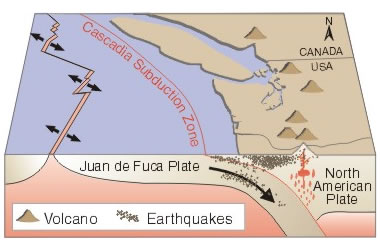
The subduction zone where the Juan de Fuca plate subducts under the North America plate is one location where dacite magmas have formed. Here the Juan de Fuca plate is relatively young when it subducts into the mantle. Geologically recent activity at Mount St. Helens has involved dacite and andesite magmas that have produced volcanic domes, lava, pyroclastic debris and volcanic ash.
Dacite magma sometimes is involved with explosive eruptions. The magma is viscous and sometimes contains abundant gas, which can cause an explosive eruption when the magma reaches the surface. Viscous dacite magmas with little to no gas can extrude from a vent to produce thick lava flows or slowly build a steep volcanic dome atop of the vent.