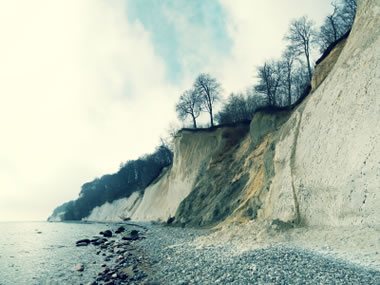
Much chalk was deposited during the Cretaceous Period of geologic time. It was a time of global high sea levels that began at the end of the Jurassic Period about 145 million years ago and the beginning of the Paleogene Period about 66 million years ago. During the Cretaceous, warm waters of epeiric seas, seas that flooded continental crust during sea level highs, existed in many parts of the world.
Warm waters of the epeiric seas facilitated chalk deposition because calcium carbonate is more soluble in cold water rather than warm water, and because organisms that produce calcium carbonate skeletal debris will more actively produce in warm water. More chalk formed during the Cretaceous Period than in any other period in geologic history. The Cretaceous received its name after the Latin word creta, which means “chalk”.