At a microscopic level, there can be a lot of space between the fossil particles that make up chalk. Land underlain by chalk directly below the soil is often well drained. In these areas, water that infiltrates into the soil encounters the top of the chalk and easily flows into the chalk’s pore spaces. It then flows downward to the water table and then follows the direction of groundwater flow to a stream or another body of surface water. In some areas, people drill water wells into subsurface chalk layers for residential, commercial, and community water supplies.
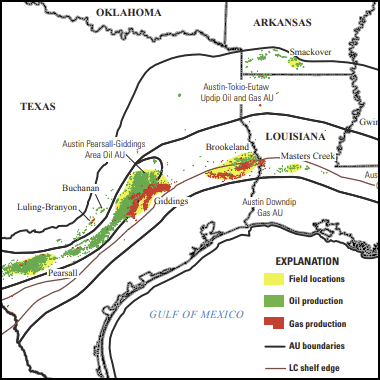
In areas where oil and natural gas form in the subsurface, the pore spaces of chalk can serve as a reservoir. Many oil and gas fields are located where subsurface chalk units serve as reservoirs. The Austin Chalk is a subsurface rock unit beneath parts of Texas, Arkansas, Louisiana and Mississippi. It yields oil and natural gas from both conventional and continuous reservoirs.