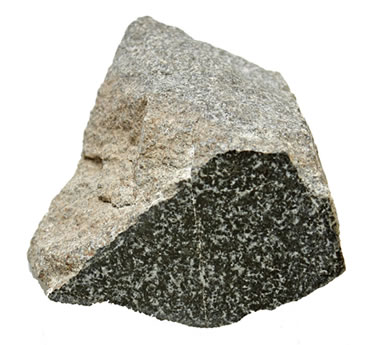
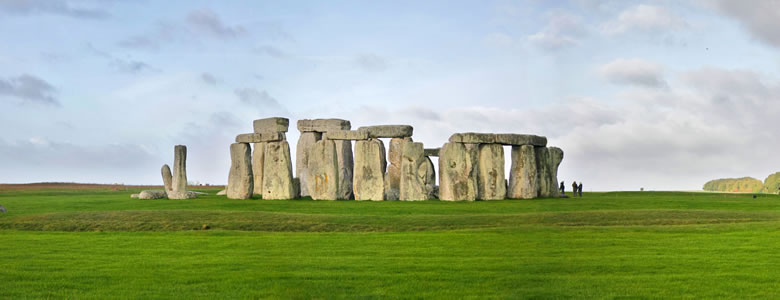
Stonehenge is one of the most famous stone structures ever made by humans. Stones of the monument’s inner circle are made of diabase. They were transported about 240 miles from Wales to the monument site in England in about 2100 BC.
What is Diabase?
In the United States and Canada, the name “diabase” is used for a dark gray to black, fine-grained, intrusive igneous rock that has a composition similar to basalt and gabbro. The difference between basalt, diabase, and gabbro is in their grain size – which was determined by their cooling rates.
Basalt: rapid cooling in a lava flow produced individual crystals that are so small they are difficult to see with the unaided eye.
Diabase: slower cooling in shallow intrusions such as sills, dikes, lopoliths or laccoliths allowed individual crystals to grow slightly larger – up to about two millimeters in size.
Gabbro: slowest cooling below Earth’s surface gave crystals a longer time to grow – some may be over a centimeter across or larger.
In the United Kingdom and a few other countries, diabase is known as “dolerite”. The two words are synonyms.