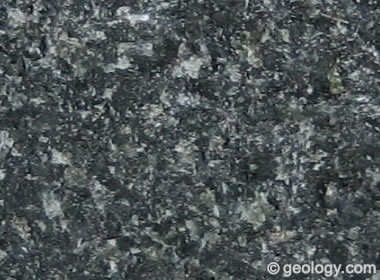
Diabase typically has a mineral composition that is dominated by the plagioclase feldspar known as labradorite (approximately 40% to 70% of the rock). Most of the remainder is made up of pyroxene minerals (usually augite). Minor amounts of hornblende, olivine, magnetite, and quartz can be found in some diabase rocks.
Although the mineral species present in diabase often have perfect cleavage, when they are present in tiny interlocking grains, the cleavage is usually not an important durability concern when the rock is used as a construction material.
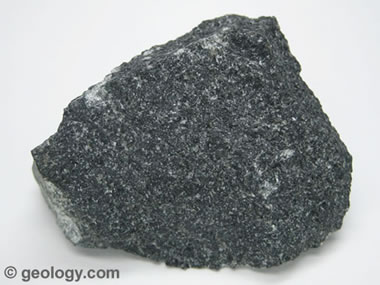
Here are two facts about diabase and its commercial use:
1) The plagioclase in diabase is often of the labradorite variety. Diabase from some quarries contains abundant crystals of labradorite that are capable of producing colorful reflections known as “labradorescence”. When cut and polished, this diabase can serve as an attractive architectural stone.
2) The pyroxene minerals in diabase, as well as the feldspars, will form a weathering rind when exposed to the elements. So, an initially black construction stone can alter to a chalky white, gray, or tan color. This should be expected unless the stone has been polished, treated, or used in a location not exposed to the elements.