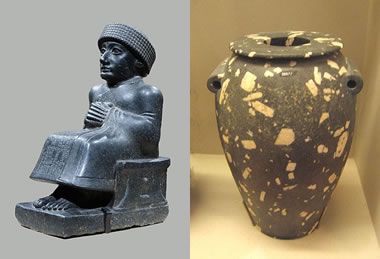
Diorite is difficult to sculpt because of its hardness, variable composition, and coarse grain size. For those reasons, it is not a favored stone of sculptors, although it was popular among ancient sculptors of the Middle East.
The most famous diorite sculpture is the Code of Hammurabi, a black diorite pillar about seven feet tall, inscribed with Babylonian laws in about 1750 BC.
Diorite has the ability to accept a bright polish, and it has occasionally been cut into cabochons or used as a gemstone. In Australia, a diorite with beautiful pink feldspar phenocrysts has been cut into cabochons and called “pink marshmallow stone.”