Synthetic diamonds have been the dominant type of diamond in industrial applications since the end of the 20th century. Most of the diamonds used to make abrasives and cutting tools are now synthetic. Virtually all diamonds used to make windows, speaker domes, heat sinks, low-friction microbearings, wear-resistant parts, and other technology products are now synthetic.
Synthetic diamonds for these purposes are much less costly than mined diamonds, have more consistent properties, and are becoming available in made-to-order specifications. There are no emotional barriers for synthetic diamonds to replace mined diamonds in these uses.
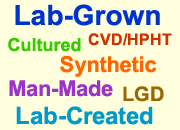
In the jewelry industry, there is considerable debate about the willingness of consumers to accept synthetic diamonds. Some believe that jewelry consumers want “real diamonds” – meaning “mined diamonds.” Others believe that synthetic diamonds will be favored by people who dislike the human rights and environmental problems associated with some of the diamonds that are mined. However, the real motivator will likely be price. Currently, many synthetic diamonds made for jewelry use have a 30 to 40% price advantage on mined diamonds. This will likely be the greatest motivator for consumers to accept synthetic diamonds.
Observation and speculation…. If you walk into almost any mall jewelry store and look into the cases where ruby, sapphire, and emeralds are sold, you will often see that most of the stones offered are synthetic. A person with very little training can often recognize them by their bright color and superb clarity. The synthetic materials have a superior appearance, and their prices are small compared to natural gems of similar size and apparent quality. Consumers get better appearance for a lower price, and the majority of them accept that transaction on the low-price end of the price range.
The battle for emotion and sales dominance in the popular-price ruby, sapphire, and emerald market was won by synthetics decades ago. In the next decade the diamond market might also move in favor of synthetics. It’s already starting as synthetic diamonds take a very visible position in the market. The price of synthetic diamonds will likely decline as more and more machines to produce them are placed into service, become more efficient, and competition among manufacturers intensifies. Eventually, the price differential between natural and synthetic diamonds will be greater than many customers will be able to ignore, and they will buy synthetic. If the next world-class advertising campaign promotes synthetic diamonds, a huge shift in consumer demand might occur. That world-class advertising campaign might be Lightbox, which offers “white” and colored diamonds at the unheard-of price of $800 per carat.