The abundant vesicles in pumice and the thin walls between them give the rock a very low specific gravity. It typically has a specific gravity of less than one, giving the rock an ability to float on water.

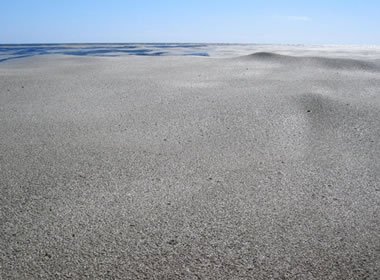
Large amounts of pumice produced by some island and subsea eruptions will float on the surface and be pushed about by the winds. The pumice can float for long periods of time – sometimes years – before it finally becomes waterlogged and sinks. Large masses of floating pumice are known as “pumice rafts.” They are large enough to be tracked by satellites and are a hazard to ships that sail through them (see images).