If you visit a store where cooking supplies and spices are sold, you might see salt in a wide variety of colors and textures being sold. Many of these “specialty salts” are natural materials. Others have been crystallized by people or processed to make a distinctive product.
Salt is sometimes crystallized to produce flake-shaped grains which have a unique texture or intensity of flavor. Some are ground coarsely to produce a burst of saltiness as they are crushed between your teeth. Some are ground finely so that they dissolve quickly, season uniformly, or coat the parts of a food particle that is most likely to touch your tongue. There is more to salt than one might imagine.
Some salts are enhanced with spices, flavoring, or color to produce a special dining experience. If you are purchasing a packaged product, check the description and ingredients to learn fascinating facts about the salt.
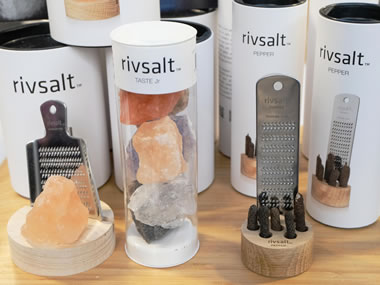
Some black cooking and table salts contain small amounts of activated charcoal which produce a flavor that many people enjoy. Pink salts are the most popular. Their color is often natural and caused by trace amounts of iron or another element included in the salt. Some have been artificially colored by people.