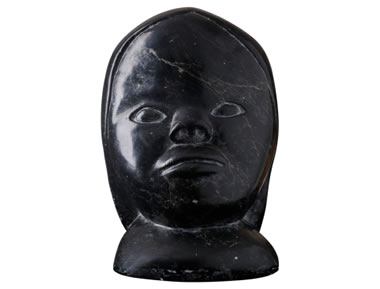
Soapstone is a metamorphic rock that is composed primarily of talc, with varying amounts of chlorite, pyroxenes, micas, amphiboles, carbonates, and other minerals. Because it is composed primarily of talc it is usually very soft. Soapstone is typically gray, bluish, green, or brown in color, often variegated. Its name is derived from its “soapy” feel and softness.
The name “soapstone” is often used in other ways. Miners and drillers use the name for any soft rock that is soapy or slippery to the touch. In the craft marketplace, sculptures and ornamental objects made from soft rocks such as alabaster or serpentine are often said to be made from “soapstone.” Be careful when purchasing if the type of rock used in making the object is important to you.

Many people use the name “steatite” interchangeably with “soapstone.” However, some people reserve the name “steatite” for a fine-grained unfoliated soapstone that is nearly 100% talc and highly suited for carving.