Soapstone cooking pots absorb heat readily from the stove and radiate it into the soup or stew. Because their walls are thick, they take a little longer to heat than a thin metal pot. However, they heat their contents evenly and retain their heat when removed from the stove – the contents of the pot keep cooking until the pot itself begins to cool. Soapstone pots are highly prized by people who learn how to use them.
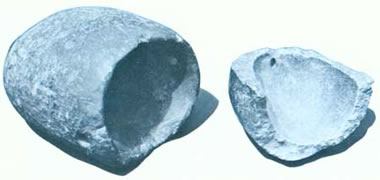
Stone Age people made the first cooking pots from soapstone without the aid of metal tools. The soft rock could be worked with sharp stones, antlers, or bone. Skilled craftsmen carved the pots directly from the outcrop. Small soapstone pots were highly prized and traded widely. Large soapstone pots were very heavy and difficult to move. Archaeologists believe that large soapstone pots were used at sites where the residents had intentions of living there for a long time.