Although many birthstone gems are affordable, some, such as diamond, emerald, and ruby, can be expensive. Decades ago, many jewelry manufacturers began using lab-grown and imitation gems in some commercial birthstone jewelry.
These man-made alternative gems, along with sterling silver or low-carat gold mountings, provided three benefits: they significantly reduced the cost of the item; improved the size, color, and clarity of the stones that the buyer was able to afford; and, allowed a better profit margin for sellers.
Many people are delighted with the lower-cost alternative. However, it is very important for the salesperson, product labeling, and receipt to clearly state that the birthstones are man-made and not natural gems – in language that any customer should easily understand. This disclosure is very important because many people only want to purchase jewelry made with natural gems. Also, selling synthetic gems without clearly disclosing their man-made origin to customers is a violation of the Guides for the Jewelry, Precious Metals and Peweter Industries, published by the Federal Trade Commission.
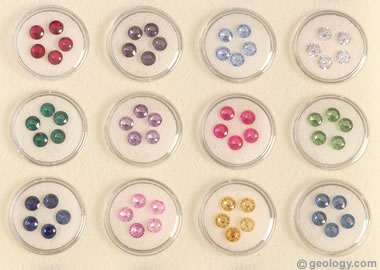
January: lab-created corundum substituting for garnet.
February: lab-created spinel doublet substituting for amethyst.
March: lab-created spinel substituting for aquamarine.
April: lab-created cubic zirconia substituting for diamond.
May: lab-created spinel doublet substituting for emerald.
June: lab-created corundum substituting for alexandrite.
July: lab-created corundum substituting for ruby.
August: lab-created spinel doublet substituting for peridot.
September: lab-created corundum substituting fo sapphire.
October: lab-created corundum substituting for tourmaline.
November: lab-created corundum substituting for topaz.
December: lab-created spinel substituting for blue zircon.