Strawberry quartz is very popular and abundant, however, material with a superb color and appearance is rare. Nature does not provide enough superb strawberry quartz to meet the demand. So, numerous people have figured out how to make materials that look just like strawberry quartz.
The most common imitation is made by melting glass and mixing in particles of hematite or another red material. When made skillfully, imitation strawberry quartz can have a very attractive color and a convincing scatter of inclusions.
Some people might be angry about these imitation materials and call them “fakes”; however, they are simply a man-made product and perfectly legal. As long as the seller informs potential customers that they are buying a man-made product and not a creation of nature, they have done their legal duty.
To prevent misunderstandings, the seller should not offer the item for sale as “strawberry quartz”. Instead they should offer it as “imitation strawberry quartz” or “strawberry quartz glass”.
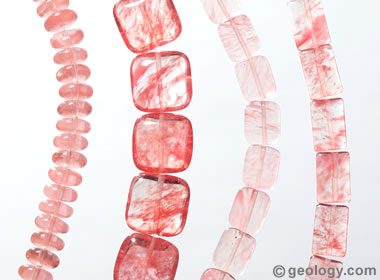
When is it Imitation? When is it “Fake”?
An item is imitation when the seller knows that the item is imitation and clearly discloses that it is man-made to the customer. Before money changes hands, the seller must informs the buyer that the item being purchased is not a natural material – that means people had a hand in producing it. The seller meets their duty of making sure that the buyer understands that the item is an imitation. This is known as a meeting of the minds.
Four things occur in the best possible transaction: 1) the seller clearly informs the buyer that the material is imitation (meaning made by people, or not natural), 2) the buyer understands that the material is imitation, 3) the item is marked man-made or imitation, and, 4) the bill of sale also documents that the item is imitation.
An item is a “fake” when the seller knows that the item is an imitation material, presents it to the buyer as if it were natural, and accepts the buyer’s money without the buyer understanding that an imitation material was purchased. If a seller gets caught knowingly selling imitation materials as natural materials they could be subject to civil or criminal liability.