The color of amethyst can often be modified by heating. Much of the yellow to golden quartz sold as “citrine” is actually amethyst that has been modified by heating. This heating can be natural or done intentionally by people.
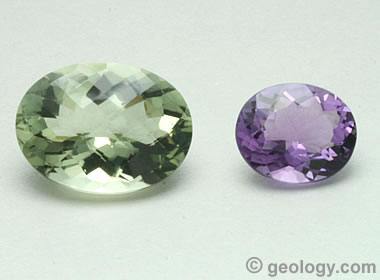
Natural or intentional heating can also change the color of amethyst to a pale green. The proper name for this material is prasiolite; however, many sellers call it “green amethyst.” These sellers run the risk of legal action from their customers or the Federal Trade Commission, who say that “it is unfair or deceptive to describe a product with an incorrect varietal name.” In fact, the Federal Trade Commission has used “green amethyst” and “yellow emerald” as examples of potentially misleading names.
Some prasiolite is also produced by irradiation of natural amethyst. This produces prasiolite with a lighter green color. This color can be lost if the material is heated to temperatures over 150 degrees Celsius.
Heating is also used to lighten the color of extremely dark amethyst or eliminate a brown tint that can be seen in many natural materials.