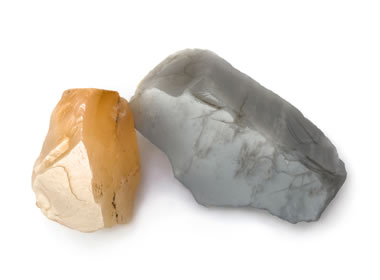
Adularescence is observed in pieces of feldspar that contain thin alternating layers of orthoclase and albite. These micron-thick layers of different composition also have different refractive indexes. Light, penetrating one layer after another, is bent, reflected and scattered at the surface of each layer. The scattered light within the stone is what causes the adularescent glow and the beauty of the gem. Interlayering of other feldspars such as labradorite, oligoclase, or sanidine can also produce adularescence.
The term “adularescence” has its origin in Switzerland. Fine-quality moonstone was mined in the Swiss Alps, near the town of St. Gotthard Pass, formerly named Mt. Adular. The moonstone found there was called “adularia”, named after the town. The name adularescence was used for the phenomena exhibited by the gem and the term spread by word of mouth and in print to gem dealers worldwide.