The first synthetic emeralds were produced in the mid-1800s, but it was not until the 1930s that Carroll Chatham began producing synthetic emerald in commercial quantities. Once commercial production began, a steady supply of synthetic emeralds began entering the market.
To date, several companies including Chatham Created Gems, Gilson, Kyocera Corporation, Lennix, Seiko Corporation, Biron Corporation, Lechleitner, and Regency, have produced synthetic emeralds by flux and hydrothermal processes.
Synthetic emeralds, also known as lab-created emeralds, have the same chemical composition and crystal structure as natural emeralds. They are sold beside natural emeralds in most mall jewelry stores in the United States. When compared to natural emeralds, the synthetics typically have superior clarity and a more uniform appearance than natural stones of equivalent cost.
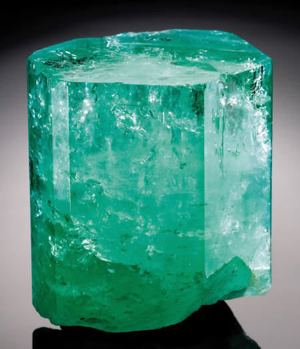
There is nothing wrong with synthetic emeralds, or synthetic stones of any kind – as long as their synthetic origin is clearly disclosed to the buyer. They are simply another option for the buyer. Many consumers purchase synthetic emeralds and enjoy them because they obtain superior appearance at a substantially lower cost.
The two key tests for separating natural emeralds from synthetic emeralds are refractive index and magnification. Natural emeralds generally have a refractive index that is slightly higher than most hydrothermally produced synthetic emeralds and much higher than most flux-grown synthetic emeralds. These differences are not large enough to be relied upon for important determinations; however, they can serve as a valuable indicator.
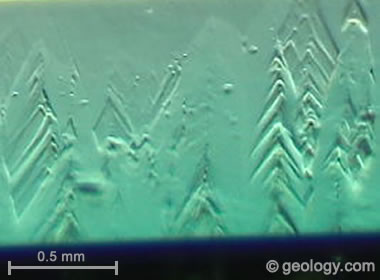
Magnification is the most important tool for separation of natural emeralds from synthetic emeralds. Synthetic emeralds can often be identified because they contain visible characteristics that are a product of the techniques used to create them.
Hydrothermal synthetic emeralds might display characteristics that include: chevron-type growth zoning, nail-head spicules, and small gold inclusions. Flux-grown synthetic emeralds might display characteristics that include: wispy veil inclusions, tiny platinum crystals, or parallel growth planes.