The name “opalite” is used for a wide variety of man-made materials. Many of them would be properly labeled “imitation opal” or “opal simulant” in a retail setting. They do not have the same chemical composition and physical properties as natural opal; instead, they simply look like natural opal.
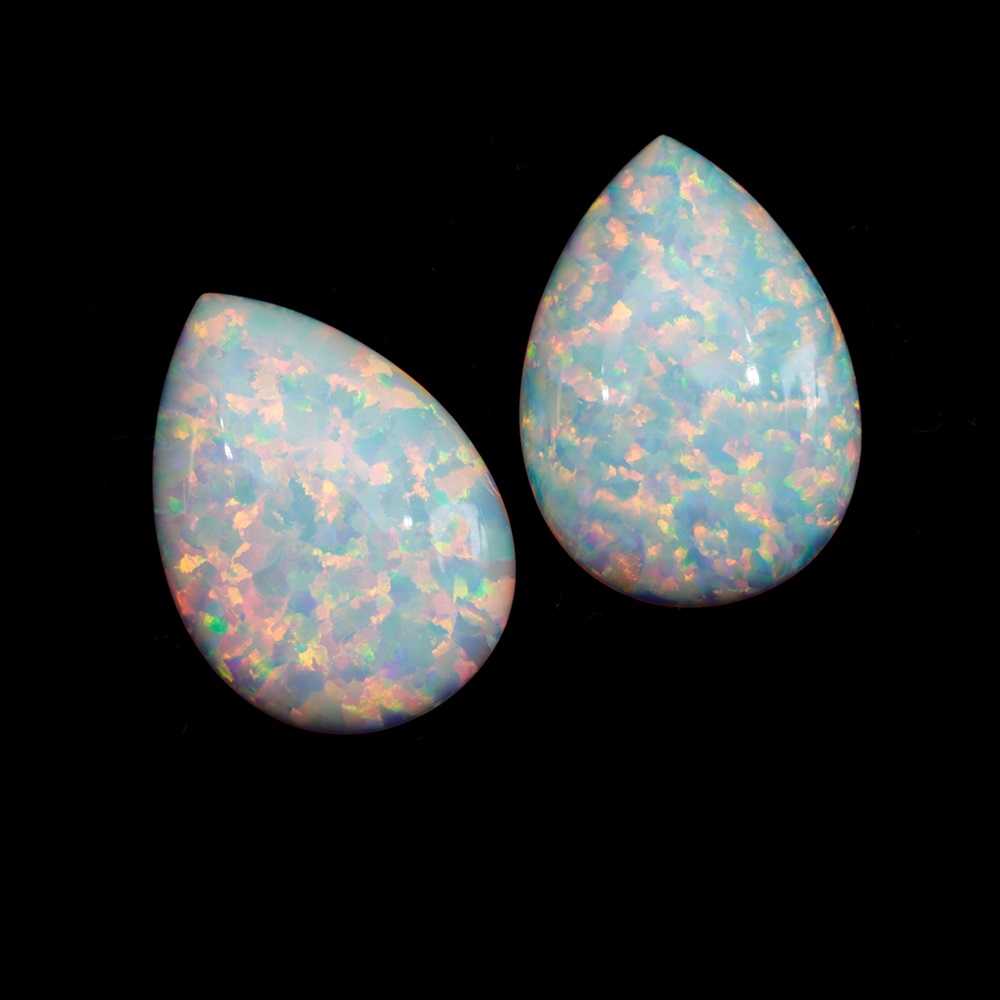
Man-made materials called opalite range from glasses and plastics that have a pearly or opalescent luster, to plastic-impregnated resins that exhibit a true play-of-color.

Some play-of-color opalites are convincing opal simulants that can be difficult to distinguish from natural opal by eye or even with a microscope. However, their high resin content changes other properties of the material. They usually have a lower specific gravity than natural opal, a lower hardness, and a different refractive index.
An experienced gemologist or a gem identification laboratory can tell the difference between common opal, imitation opal, and synthetic opal (a man-made material that has the same chemical composition and physical properties as natural opal).
If you are paying a lot of money for an opal and you want to make sure that it is a natural opal – rather than a man-made material – it is a good idea to submit the gem to a reputable gem identification laboratory.