Chinese craftsmen have been producing jade objects for over 5,000 years. A few hundred years ago, master Chinese craftsmen who worked with jade daily recognized that some of the jade obtained from Burma (now the Union of Myanmar) was different. It was harder, denser, worked more easily, and produced a higher luster upon polishing. It gradually became the form of jade preferred by Chinese artisans and the jade most highly prized by the Chinese people. They realized this long before scientists differentiated jadeite and nephrite in 1863.
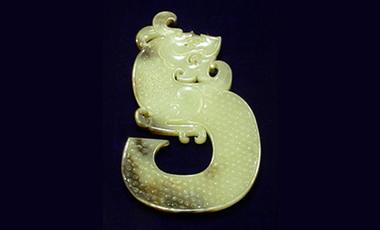
Jade Dragon: Hand-made jade dragon from the Western Han Dynasty (202 BC – 9 AD).
Unknowingly, Chinese craftsmen had distinguished jadeite from nephrite and appreciated it enough to pay premium prices for jadeite. However, they didn’t have the knowledge and equipment of chemistry and crystallography to distinguish them in a formal way.
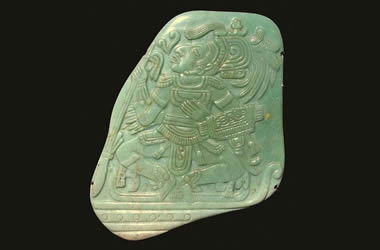
Mayan jadeite: Hand-made Mayan jadeite pectoral from the Mayan Classic period.
Rarely, the Chinese craftsmen encountered fine-grained jadeite with a bright translucence and a rich, uniform green color. This beautiful material was given the name “Imperial Jade” and regarded as the stone of highest quality. At that time in China, ownership of Imperial Jade was reserved only for the Emperor. Now, anyone who can afford it can own Imperial Jade. The best specimens can cost more per carat than high-quality diamonds.