Lab-grown diamonds have been produced since the 1950s. Nearly all of the earliest lab-grown diamonds were put to industrial uses such as making abrasive granules for cutting, drilling, and polishing tools. At that time, lab-grown diamonds had color and clarity issues which made them unsuitable for use as gems.
One of the main incentives for developing methods of producing man-made diamonds was the fact that abrasive tool industries were starting to consume more diamond than could easily be supplied by mining.
The young diamond-growing industry had the potential to produce an unlimited and reliable supply of diamond abrasives if the cost of production was low enough to compete with natural diamond. This challenge was quickly achieved. Today diamond abrasive granules are produced in hundreds of factories in many parts of the world at a cost of under $1 per carat.
Within a few decades, lab-grown diamonds were being made pure enough and large enough that they could be used in a variety of high-tech applications. Lab-grown diamonds were being used as heat sinks in advanced computers; wear-resistant coatings on tools and bearings; high-durability windows; tiny anvils for high pressure experiments; specialized lenses; speaker domes; and much more.
In 1971 General Electric produced the first gem-quality lab-grown diamonds by the HPHT (high pressure / high temperature) process. The rough was in the form of small yellow crystals, often with metallic inclusions. Earth’s atmosphere is 78% nitrogen, and it is the cause of yellow color in diamonds. Trace amounts of nitrogen in a diamond will produce a yellow color. Keeping it out of the diamond growing process was impossible at that time.
In 1989 the first diamonds were grown by the CVD (chemical vapor deposition) process. This process is better suited to growing gem-quality diamonds because fewer impurities are introduced into the diamond.
During the 1990s a small number of gem-quality diamonds were being produced in laboratories, but very few entered the marketplace. These diamonds were costly to produce, and manufacturers needed to reduce costs and improve quality to be competitive in the diamond jewelry market.
By 2010 the quality of lab-grown diamonds had improved significantly. A small but increasing number of lab-grown diamonds began entering the gem and jewelry market. Today, several companies are creating commercial quantities of beautiful lab-grown diamonds with spectacular clarity and color. Now, several percent of the diamonds entering the gem and jewelry marketplace are laboratory-grown.
In recent years, much work has been done to develop instruments that can be used to separate natural diamonds from lab-grown diamonds. Numerous companies are racing to develop a low-cost machine with a low error rate. Diamond identification abilities are needed for automatic sorting of large quantities of diamonds. Low-cost instruments are also needed for use in jewelry stores and pawn shops.
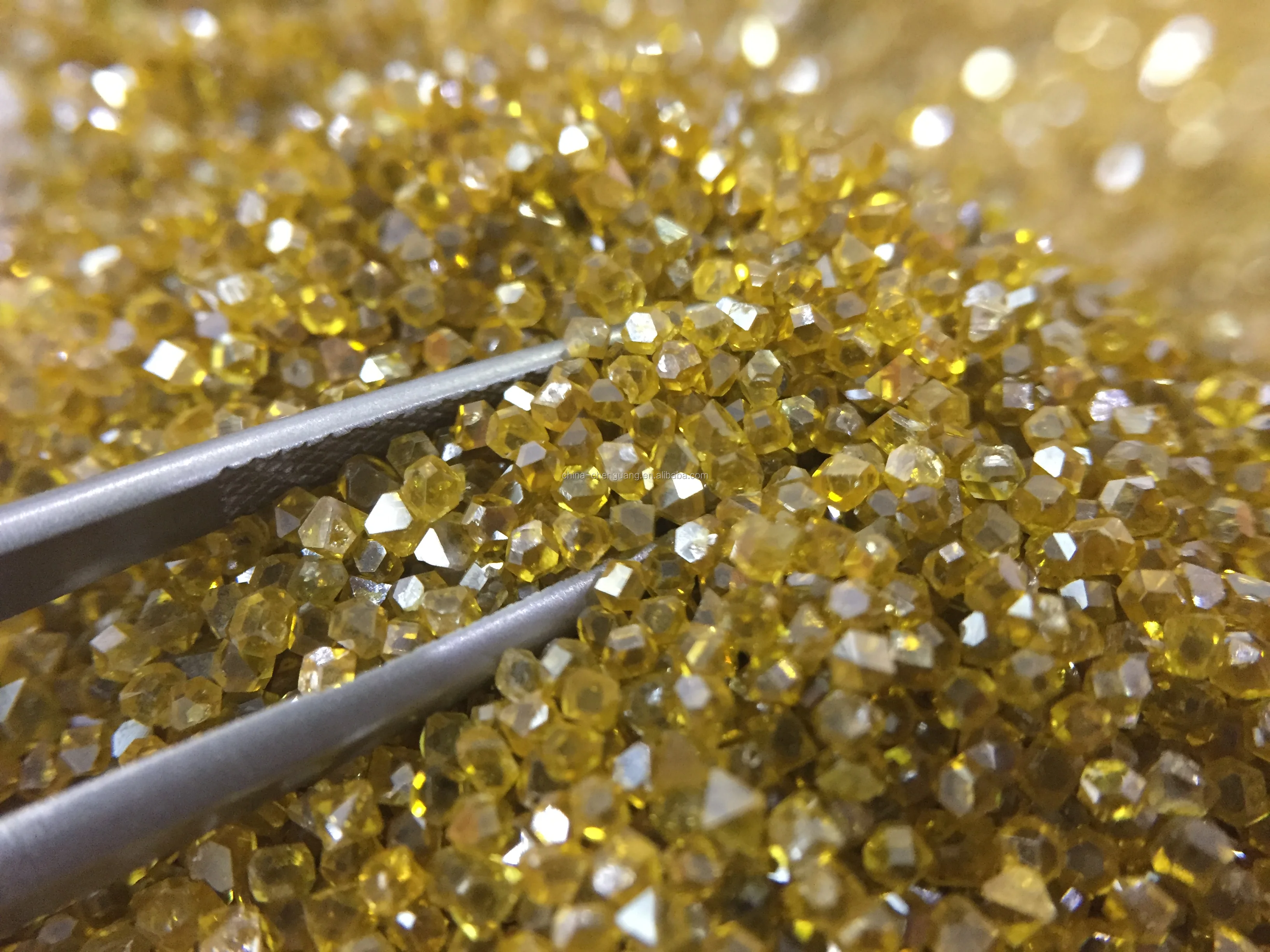
Diamond Abrasive Granules: Most lab-grown diamond produced today is used to make abrasive granules for cutting, drilling, and polishing processes. The pile of abrasive granules pictured here is about 1 centimeter across and weighs about 0.68 carat. We purchased 100 carats of 270/325 mesh (53/45 micron) diamond abrasive granules for $27.50, or 27.5 cents per carat. Is that less expensive than you would have guessed? Companies purchasing synthetic diamond abrasives in wholesale quantities will receive a much lower price.
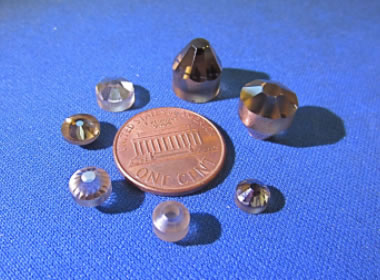
Diamond Anvils manufactured from synthetic diamond are used in high-pressure testing and experiments. These anvils were manufactured from CVD diamond. Their bases measure between 5 and 10 millimeters in diameter and their culets between 1.5 and 3 millimeters.