Ametrine is rarely found in nature. Almost all of the world’s commercial ametrine production has been from the Anahi Mine in southeastern Bolivia. The mine has been operated by Minerales y Metales del Oriente S.R.L. since 1989.
The Anahi Mine is in a dolomitic limestone of the Murcielago Group, a sequence of limestones up to 1500 feet thick that dip to the southwest in the area of the mine. Some zones within the Murcielago Group are heavily silicified, causing them to resist weathering and stand up above the surrounding Pantanal lowlands as prominent north-south-trending ridges. The Anahi Mine is in a ridge at a location where the dolomitic limestone is faulted and silicified. [1] Most of the mining activity is done underground, with a small amount of production at the surface.
Hydrothermal activity has facilitated the growth of quartz within fractures and vugs of the dolomitic limestone. The walls of these openings are often covered with a thick layer of massive quartz with euhedral quartz crystals growing inwards towards the center of the cavities. Some of these are crystals of ametrine; many have been etched by later hydrothermal activity.
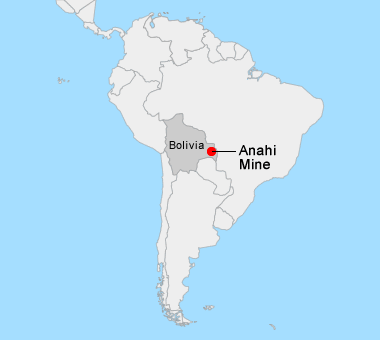
Ametrine mine map: This map shows the geographic location of the Anahi ametrine mine in the Pantanal of eastern Bolivia.