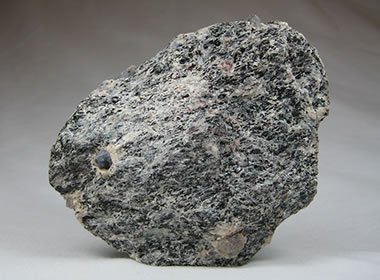
Corundum is found as a primary mineral in igneous rocks such as syenite, nepheline syenite, and pegmatite. Some of the world’s most important ruby and sapphire deposits are found where the gems have weathered from basalt flows and are now found in the downslope soils and sediments.
Corundum is also found in metamorphic rocks in locations where aluminous shales or bauxites have been exposed to contact metamorphism. Schist, gneiss, and marble produced by regional metamorphism will sometimes contain corundum. Some of the sapphires and rubies of highest quality, color, and clarity are formed in marble along the edges of subsurface magma bodies.
Corundum’s toughness, high hardness, and chemical resistance enable it to persist in sediments long after other minerals have been destroyed. This is why it is often found concentrated in alluvial deposits.
These deposits are the most important source of rubies and sapphires in several parts of the world. Traditional sources of alluvial rubies and sapphires include Burma, Cambodia, Sri Lanka, India, Afghanistan, Montana, and other areas. In the past few decades, several parts of Africa, including Madagascar, Kenya, Tanzania, Nigeria, and Malawi, have become important producers of ruby and sapphire.