The name “Paraiba” perks up the ears of people who like tourmaline. In 1989 and 1990, spectacular bright blue to bright green elbaite tourmaline, colored by trace amounts of copper, was found in pegmatite pockets at mines in the states of Paraiba and Rio Grande do Norte, Brazil.
Later, violet specimens containing traces of both copper and manganese were found. The color of these gems was remarkable. Many people began to describe them with adjectives such as “electric” and “neon” because the colors were so saturated and vivid.
The material was informally called “Paraiba” after the locality. The beautiful gems were soon selling for over $2000 per carat, and news about them spread throughout gemstone markets.
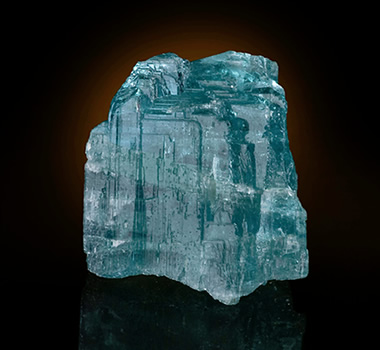
People loved the gems, their colors, and their exotic name. Prices for faceted gems of the highest quality material in sizes over one carat escalated to over $10,000 per carat. “Paraiba” quickly became the most popular and most valuable tourmaline.
The initial rage over these gems was all about the character of their color. Soon, people anxious to cash in were using the name “Paraiba” for any tourmaline found in the state of Paraiba – hoping that it would boost the price of what they were selling.
Gems of similar appearance were found in Nigeria in 2001 [3], and some people immediately applied the name to them – again in the hope that it would boost their value. More were discovered in Mozambique in 2005. [3] People with blue or green tourmaline from many parts of the world wanted to sell their material at a “Paraiba price” – but should these gems be called “Paraiba”?.
The name “Paraiba” was being used on the basis of locality, on the basis of color, and on the basis of color-causing metal. The name “Paraiba” was being used in too many different ways – and confusion was brewing in the marketplace.
A 2006 article in Gems & Gemology reported that “the Nigerian and Mozambique tourmalines with the saturated blue-to-green colors cannot be distinguished from the Brazilian material by standard gemological testing,” however, trace element analysis could be used to separate the Brazilian, Nigerian, and Mozambique tourmalines. [3] [4]
So, what is the real “Paraiba”? A good answer might be similar to “What is a real ‘Burmese ruby’?” It is a gem of finest appearance from a specific locality (Burma, known today as Myanmar) – and some people are willing to pay a lot extra for them. That is why rubies from Madagascar with a similar appearance do not sell for a “Burmese” price. [5]
One should not assume that a name, a locality, or a color automatically produces value in a gem.
Keep that in mind if a vendor offers you “Paraiba tourmaline”.
If you own or are considering the purchase of a “Paraiba tourmaline”, first, remember that spectacular color is what started the rage over these gems. Make sure you are buying spectacular color. Next, many people are willing to pay more for gems from the original Paraiba localities in Brazil, and many people want to buy only gems that have natural, untreated color. Determining this information is above the skill level of and equipment available to most gemologists.
A reputable place to have this done is The Gemological Institute of America (GIA) laboratory. They offer Colored Stone Identification and Origin Reports specifically for Paraiba tourmaline. [6] By sending your gem to GIA for one of these reports, they will provide their opinion on the geographic origin of the gem, and provide information about any treatments that have been detected. If you want to know more about how this is done read GIA’s article about the geographic origin of paraiba tourmaline.