Changing conditions during tourmaline crystal growth often result in single crystals that contain two or more different colors of tourmaline. The earlier color is usually overgrown by the later color. These bicolor crystals are known as “zoned crystals.” Cut gemstones with distinctly different color zones are known as parti-color gems.
In many gems, color zoning is undesirable because most gem and jewelry buyers prefer stones that have a single, uniform face-up color. Tourmaline is an exception to this trend. Gems cut from color-zoned crystals with pleasing colors are a novelty prized by designers and collectors.
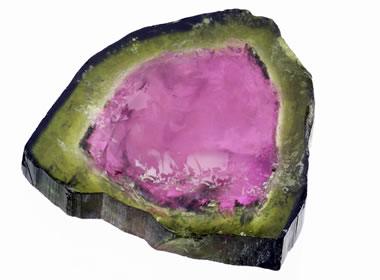
Color-zoned crystals are often sawn into thin cross-sections and polished. These thin bicolor gems can be very attractive. The most popular bicolor tourmaline is “watermelon tourmaline.” It has a pink interior and a green rind – just like a slice of watermelon. The closer the colors match those of a real watermelon, the more people enjoy them and the higher the price.
Tourmaline crystals are also faceted to produce bicolor gems. “Watermelon” is again the most popular, but many other beautiful color combinations are cut.
Zoned tourmaline crystals often have clarity problems in the color-change area. If the color combination is attractive, minor clarity problems usually do not have a major impact on their desirability or price.