The photographs and descriptions on this page illustrate some of the most common lusters observed in minerals.
Metallic Luster
Specimens with a metallic luster exhibit the reflectivity and brightness of a metal and are always opaque. The smoother the surface, the brighter their luster, and the higher their reflectivity.
When a beam of incident light is reflected from a perfectly smooth reflective surface, the angle of reflection is equal to the angle of incidence. Smooth surfaces have higher lusters because all of the light that strikes them has an opportunity to be reflected. However, when light strikes a rough surface, much of the light is hitting irregularities in the surface. This light is scattered in many directions. These specimens with an irregular surface will have a lower luster than specimens with a smooth surface.
Most metallic minerals have a color similar to native metals such as gold, silver, or copper. Just because a specimen is highly reflective does not give it a metallic luster. It must also be opaque and exhibit the color of a metal.
Opacity is an important part of a metallic luster. Light enters specimens that are transparent or translucent. When a specimen is opaque, then all of the incident light has an opportunity to be reflected.
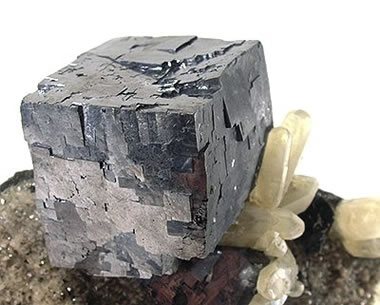
Many sulfide and sulfosalt minerals have a metallic luster, such as pyrite, galena, chalcopyrite, and pyrrhotite. Some oxide minerals such as hematite, rutile, magnetite, and cassiterite may exhibit a metallic luster.
Submetallic Luster
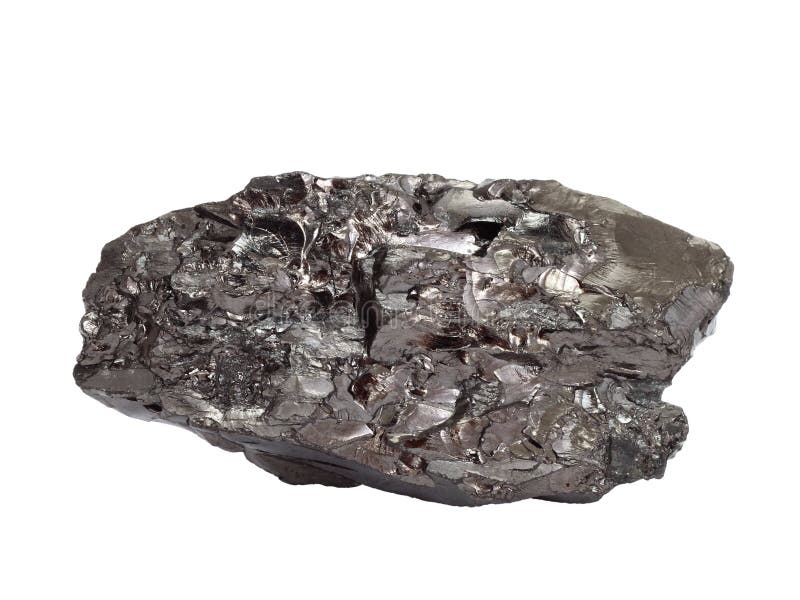
Some specimens exhibit a luster that falls short of being called “metallic” or makes the observer doubtful about using that adjective. The word submetallic might be used for these specimens.
These specimens are usually opaque, and they are often black in color. Others have a small grain size, or an irregular or pitted surface that interferes with the reflection of incident light.
Observers should be careful, because tarnish will sometimes mislead them into deciding that a specimen is submetallic rather than metallic or nonmetallic. This is when observations of luster on a freshly broken surface become important.
Hematite, magnetite, graphite, and chromite are examples of minerals that can exhibit a submetallic luster.
Nonmetallic Luster
Most mineral specimens do not exhibit a metallic or submetallic luster. These specimens are said to have a “nonmetallic” luster. There are many varieties of nonmetallic lusters, and the most common are described below.
Note: The name “nonmetallic” applies to the luster of these minerals and has nothing to do with their elemental composition.
Vitreous Luster
Specimens that have a vitreous luster have a reflective appearance that is similar to glass. This luster is sometimes called “glassy.” Many specimens of apatite, beryl, fluorite, and quartz have a vitreous luster. Some specimens of calcite have a vitreous luster on their cleavage surfaces.
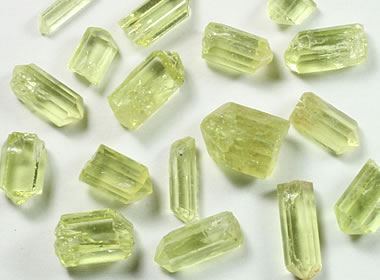
Vitreous is the most common type of luster. About 70% of all minerals can exhibit a vitreous luster.
Dull Luster
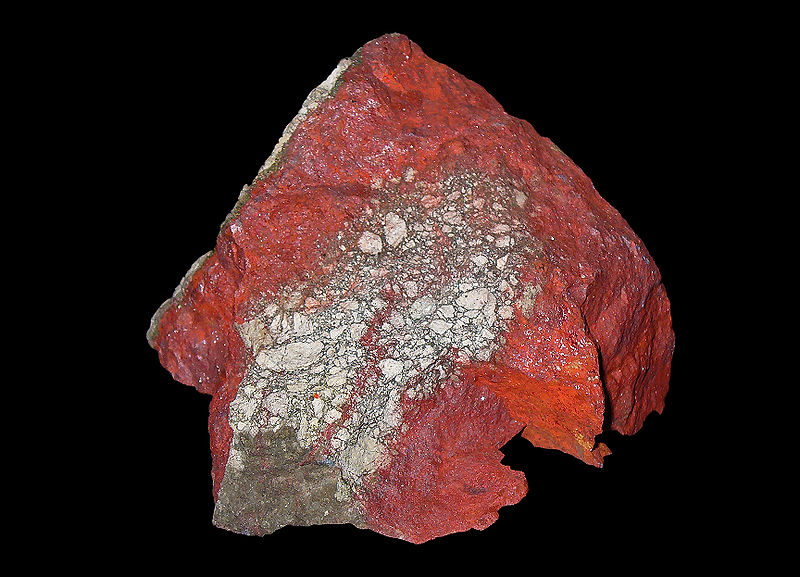
Specimens with a dull luster, sometimes described as an “earthy” luster, are non-reflective. They have a rough, porous, or granular surface that scatters light instead of reflecting light. Kaolinite, limonite, and some specimens of hematite have a dull or earthy luster.
Greasy Luster
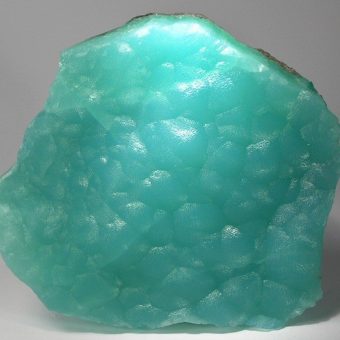
Specimens with a greasy luster appear to be coated with a thin layer of oil or grease. Some specimens of serpentine, jade, diamond, vesuvianite, and nepheline have a greasy luster.
Pearly Luster
Specimens with a pearly luster (sometimes called nacreous luster) have a surface with a reflective quality that is similar to a pearl.
This appearance often occurs on cleavage surfaces of transparent to translucent minerals that include some micas, some feldspars, and some carbonate minerals. Examples include muscovite, orthoclase, and calcite.
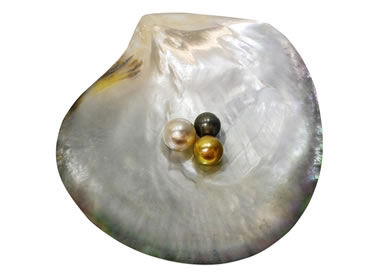
In these minerals, light enters the mineral and reflects from multiple atomic planes beneath the surface. This can produce an out-of-focus glow of light emerging from shallow depths within the specimen.
Resinous Luster
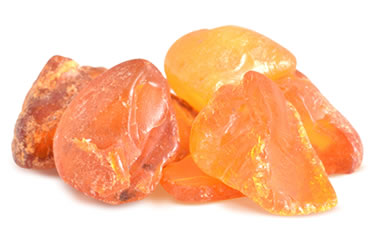
The name resinous refers to the appearance of the resin secreted by conifer trees. Amber, sphalerite, almandine garnet, and some specimens of sulfur exhibit a resinous luster. Specimens with a resinous luster are usually yellow, orange, red, or brown in color.
Silky Luster
Some mineral specimens are composed of many parallel fibers or parallel crystals that are bound together and reflect light. This produces a luster that is similar to the light reflected from a bundle of parallel silk threads.
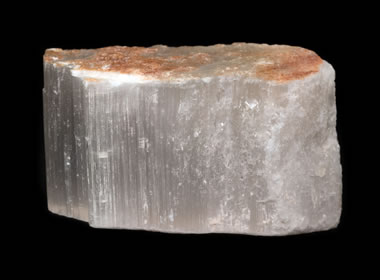
The satin spar variety of gypsum is an excellent example of a silky luster. Tiger’s-eye, chrysotile (serpentine), tremolite, and ulexite can also exhibit a silky luster.
The tourmaline crystals in the first image at the top of this page have a silky luster produced by parallel striations on prismatic crystals.
Waxy Luster
Materials that have a waxy luster have an appearance that is similar to the surface of a candle, a block of beeswax, or a piece of paraffin. Some specimens of talc, serpentine, rough opal, jade, and the conchoidal fracture surfaces of agate are examples of materials with a waxy luster.
Materials with a waxy luster are usually translucent, and direct light upon them produces a soft waxy glow.
Adamantine Luster
Adamantine is the highest luster observed in minerals. It is a luster that is similar to vitreous, but the adamantine specimens are more reflective. There is no sharp division between a vitreous luster and an adamantine luster. When a specimen has a luster that is difficult to assign to one of these categories, the term subadamantine might be suitable.
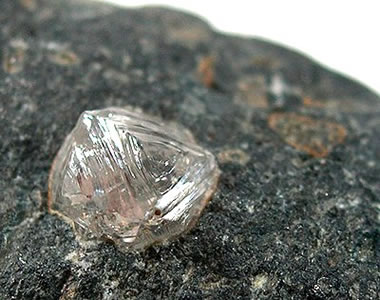
Some specimens of diamond, cassiterite, corundum, sphalerite, cerussite, vanadinite, titanite, malachite, rutile, and zircon exhibit an adamantine luster.