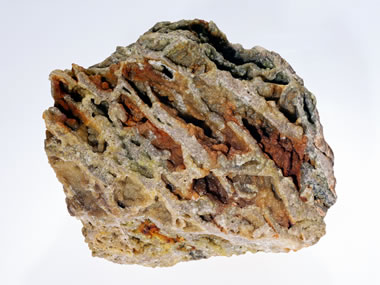
Smithsonite is a secondary mineral found in the rocks above and around many important zinc deposits. These smithsonite occurrences are often seen at the surface or at shallow depths. As a result, smithsonite was one of the earliest zinc minerals to be discovered and mined by pioneer metallurgists. Finding smithsonite at the surface has led to the discovery of a major zinc deposit below.
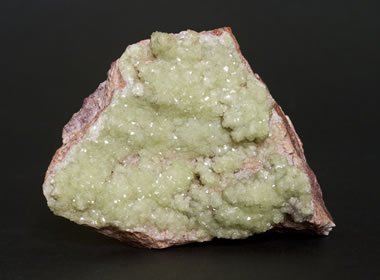
Much smithsonite originates when weathering liberates zinc from a deposit’s primary mineral – which is often sphalerite. Zinc ore oxidized in the presence of carbon dioxide can result in the formation of smithsonite. This smithsonite is a secondary mineral often found as fracture fillings and botryoidal coatings on country rock. Smithsonite, formed from redeposited zinc, is an excellent example of a secondary mineral.
Smithsonite is almost never found as nice crystals. Botryoidal coatings on rocks and fractures are a common mode of occurrence. Another mode of occurrence is known as dry-bone ore – an impure and friable variety of smithsonite with a honeycomb-like structure.