Tiny diamonds have been found in rocks that are thought to have been subducted deep into the mantle by plate tectonic processes – then returned to the surface. (See Location 2 in the diagram at the top of the page.) Diamond formation in a subducting plate might occur as little as 50 miles (80 kilometers) below the surface and at temperatures as low as 390 degrees Fahrenheit (200 degrees Centigrade). In another study, diamonds from Brazil were found to contain tiny mineral inclusions consistent with the mineralogy of oceanic crust. Others have inclusions that suggest that subducted seawater was involved in their formation.
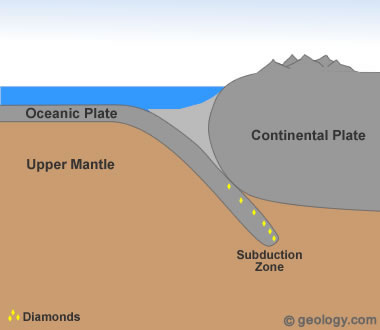
A more recent study investigated the origin on blue, boron-containing diamonds that formed at depths as great as 400 miles (650 kilometers). These super-deep diamonds also contained inclusions indicating that they were derived from subducted oceanic crust.
Is coal involved? Coal is not a probable carbon source for this diamond-forming process. The most likely carbon sources from the subduction of an oceanic plate are carbonate rocks such as limestone, marble, and dolomite, and possibly particles of plant debris in offshore sediments.