Most ilmenite forms during the slow cooling of magma chambers and is concentrated through the process of magmatic segregation. A large underground magma chamber can take centuries to cool. As it cools, crystals of ilmenite will begin forming at a specific temperature. These crystals are heavier than the surrounding melt and sink to the bottom of the magma chamber.
This causes ilmenite and similar-temperature minerals, such as magnetite, to accumulate in a layer at the bottom of the magma chamber. These ilmenite-bearing rocks are often gabbro, norite, or anorthosite. Ilmenite also crystallizes in veins and cavities and sometimes occurs as well-formed crystals in pegmatites.
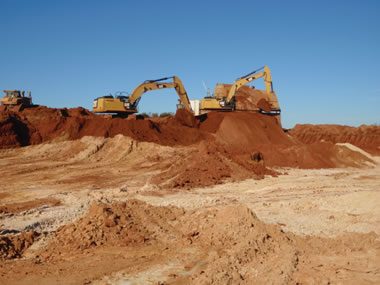
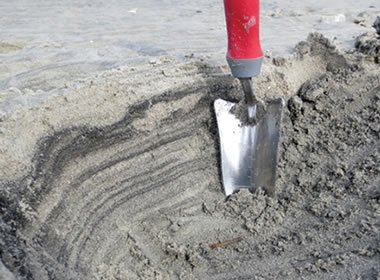
Ilmenite has a high resistance to weathering. When rocks containing ilmenite weather, grains of ilmenite disperse with the sediment. The high specific gravity of these grains causes them to segregate during stream transport and accumulate as “heavy mineral sands.” These sands are black in color and easily recognized by geologists. “Black sand prospecting” has long been a method of finding heavy mineral placer deposits. Most commercially produced ilmenite is recovered by excavating or dredging these sands, which are then processed to remove the heavy mineral grains such as ilmenite, leucoxene, rutile, and zircon.