The first step in amethyst receiving its purple color begins during crystal growth. That is when trace amounts of iron are incorporated into a growing quartz crystal. After crystallization, gamma rays, emitted by radioactive materials within the host rock, irradiate the iron to produce the purple color.
The intensity of amethyst’s purple color can vary from one part of the crystal to another. These color variations, known as “color zoning,” are caused by varying amounts of iron being incorporated into the crystal during different stages of crystal growth.
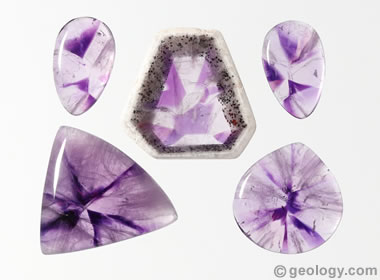
Color Zoning in Amethyst: Amethyst cabochons with interesting color zoning. Each cabochon was cut from a thin slice of a color-zoned amethyst crystal that was sliced perpendicular to its c-axis. It is interesting how color can be concentrated into certain sectors of a growing crystal. Some people call these color-zoned slices “trapiche-like amethyst”.
Amethyst crystals grow slowly and the composition of the fluids delivering the iron and the silica needed for crystal growth can vary. The darkest color of amethyst forms when the largest amount of iron is incorporated into the growing crystal. That is what causes color zoning.
Color zoning influences the marketability and value of amethyst. Most people want a gem with a rich and uniform color. As a result, gems of uniform color – no color zoning – are the most desirable and the most valuable.
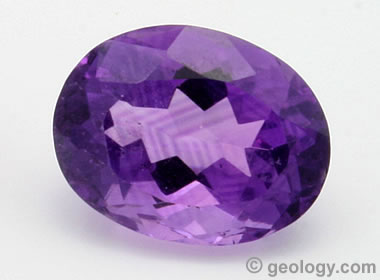
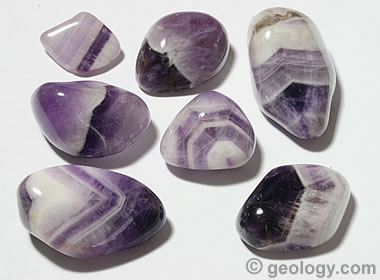
Color Zoning in Amethyst: Amethyst crystals grow slowly, and the composition of the waters from which they grow can change over time. As the composition of the water changes, varying amounts of iron are incorporated into the surface of the crystal. Later, radiation emitted by minerals in the surrounding rock modify the iron to produce the purple color. This can cause the crystal to have zones of different color intensity. Each of these zones records a time interval in the growth of the crystal similar to the growth rings of a tree. The gem in the photo above shows dramatic color zoning. Although this is geologically interesting, the most preferred amethyst gems have a rich, uniform color.Tumbled stones: Amethyst is very popular as a tumbled stone. Shown above are tumbled stones made of banded amethyst, sometimes called “chevron” amethyst because of its V-shaped pattern. This is an extreme example of color zoning within a single amethyst crystal. The color varies from overly dark purple, to dark purple, to medium purple, to light purple, and to plain white quartz. A touch of smoky quartz is visible in two stones. Each band represents a different episode of crystal growth and crystallization conditions. These stones are from material produced in Namibia. The largest is about 1 1/2 inches long.