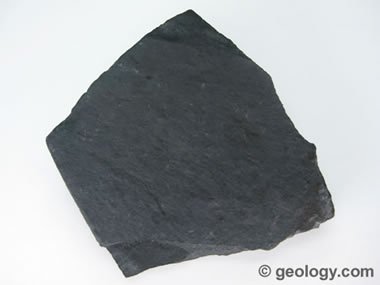
A black color in sedimentary rocks almost always indicates the presence of organic materials. Just one or two percent organic materials can impart a dark gray or black color to the rock. In addition, this black color almost always implies that the shale formed from sediment deposited in an oxygen-deficient environment. Any oxygen that entered the environment quickly reacted with the decaying organic debris. If a large amount of oxygen was present, the organic debris would all have decayed. An oxygen-poor environment also provides the proper conditions for the formation of sulfide minerals such as pyrite, another important mineral found in most black shales.
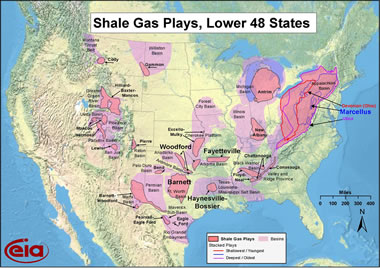
The presence of organic debris in black shales makes them the candidates for oil and gas generation. If the organic material is preserved and properly heated after burial, oil and natural gas might be produced. The Barnett Shale, Marcellus Shale, Haynesville Shale, Fayetteville Shale, and other gas-producing rocks are all dark gray or black shales that yield natural gas. The Bakken Shale of North Dakota and the Eagle Ford Shale of Texas are examples of shales that yield oil.
Gray shales sometimes contain a small amount of organic matter. However, gray shales can also be rocks that contain calcareous materials or simply clay minerals that result in a gray color.