Composition of Dacite


A generalized mineral composition for dacite is intermediate between rhyolite and andesite. It usually contains more quartz than andesite and more plagioclase than rhyolite. The plagioclase feldspars are often oligoclase, andesine or labradorite. Dacite can be considered the fine-grained equivalent of granodiorite.

Plagioclase is the most abundant mineral in many dacites. Other minerals that might be found in dacite include quartz, biotite, hornblende, augite, and enstatite. Dacites consisting mostly of plagioclase and quartz are usually light in color, often white to light gray. Those with abundant hornblende and biotite can be light gray to light brown. The darkest dacites usually contain abundant augite or enstatite.
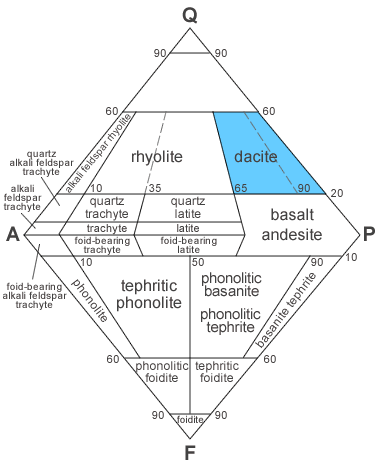
QAPF Diagram for Dacite
QAPF Diagram for Dacite: A QAPF diagram is a method of classifying igneous rocks on the relative abundance of quartz, alkali feldspar, plagioclase feldspar, and feldspathoid minerals. The first letter of each of these minerals / mineral groups is the source of the “QAPF” name used for the diagram. Before plotting the composition of a rock on the diagram, the percentages of the QAPF minerals are recalculated so that their sum is 100%. Plotting the composition of a rock on the diagram allows a name to be assigned to the rock, and it also illustrates the composition of that rock type with many other igneous rock varieties. The diagram above is specific for fine-grained igneous rocks.

Leave a Reply

Your email address will not be published. Required fields are marked *