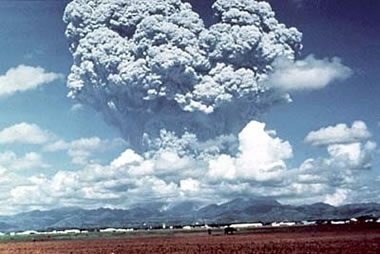
The second most powerful volcanic eruption of the 20th century was at Mount Pinatubo in 1991. The description below explains how enormous volumes of dissolved gas powered the eruption and how a cubic mile of ash and pumice lapilli was blasted from the volcano.
Pinatubo eruption: The explosive eruption of Mount Pinatubo in the Philippines on June 12, 1991 ejected more than five cubic kilometers of material and was rated as a VEI 5 eruption on the volcanic explosivity index. Much of that material was pumice lapilli
“From June 7 to 12, the first magma reached the surface of Mount Pinatubo. Because it had lost most of the gas contained in it on the way to the surface, the magma oozed out to form a lava dome but did not cause an explosive eruption. However, on June 12, millions of cubic yards of gas-charged magma reached the surface and exploded in the reawakening volcano’s first spectacular eruption.
When even more highly gas charged magma reached Pinatubo’s surface on June 15, the volcano exploded in a cataclysmic eruption that ejected more than 1 cubic mile of material. […] A blanket of volcanic ash and pumice lapilli blanketed the countryside.
Huge avalanches of searing hot ash, gas, and pumice roared down the flanks of Mount Pinatubo, filling once-deep valleys with fresh volcanic deposits as much as 660 feet thick. The eruption removed so much magma and rock from below the volcano that the summit collapsed to form a large volcanic depression 1.6 miles across.”