Rutile occurs as an accessory mineral in plutonic igneous rocks such as granite and in deep-source igneous rocks such as peridotite and lamproite. In metamorphic rocks, rutile is a common accessory mineral in gneiss, schist and eclogite. Well-formed crystals of rutile are sometimes found in pegmatite and skarn.
Rutile and a number of other metallic ore minerals are mined together from sedimentary deposits known as “heavy mineral sands”. These sediments are derived from the weathering of igneous and metamorphic rocks that contain abundant tiny grains of high-specific-gravity minerals such as rutile, ilmenite, anatase, brookite, leucoxene, perovskite, and titanite (also known as sphene).
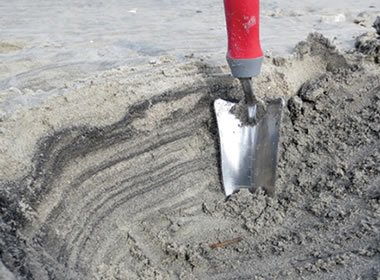
As these rocks weather, their more resistant mineral particles are washed into the marine coastal environment where they are sorted and concentrated according to their density by wave and current action. Where conditions are right and heavy minerals are abundant, these sediments can become minable deposits.