Coal forms from the accumulation of plant debris, usually in a swamp environment. When a plant dies and falls into the swamp, the standing water of the swamp protects it from decay. Swamp waters are usually deficient in oxygen, which would react with the plant debris and cause it to decay. This lack of oxygen allows the plant debris to persist. In addition, insects and other organisms that might consume the plant debris on land do not survive well under water in an oxygen-deficient environment.
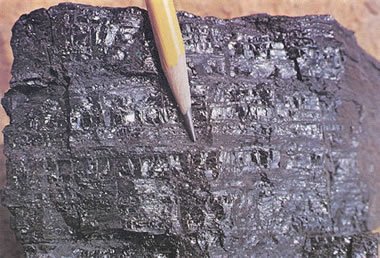
To form the thick layer of plant debris required to produce a coal seam, the rate of plant debris accumulation must be greater than the rate of decay. Once a thick layer of plant debris is formed, it must be buried by sediments such as mud or sand. These are typically washed into the swamp by a flooding river. The weight of these materials compacts the plant debris and aids in its transformation into coal. About ten feet of plant debris will compact into just one foot of coal.
Plant debris accumulates very slowly. So, accumulating ten feet of plant debris will take a long time. The fifty feet of plant debris needed to make a five-foot thick coal seam would require thousands of years to accumulate. During that long time, the water level of the swamp must remain stable. If the water becomes too deep, the plants of the swamp will drown, and if the water cover is not maintained the plant debris will decay. To form a coal seam, the ideal conditions of perfect water depth must be maintained for a very long time.
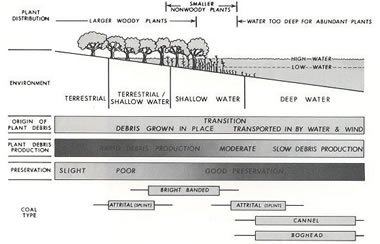
If you are an astute reader you are probably wondering: “How can fifty feet of plant debris accumulate in water that is only a few feet deep?” The answer to that question is the primary reason that the formation of a coal seam is a highly unusual occurrence. It can only occur under one of two conditions: 1) a rising water level that perfectly keeps pace with the rate of plant debris accumulation; or, 2) a subsiding landscape that perfectly keeps pace with the rate of plant debris accumulation. Most coal seams are thought to have formed under condition #2 in a delta environment. On a delta, large amounts of river sediments are being deposited on a small area of Earth’s crust, and the weight of those sediments causes the subsidence.
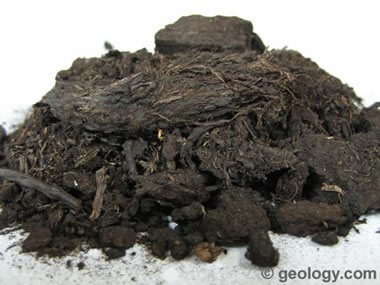
For a coal seam to form, perfect conditions of plant debris accumulation and perfect conditions of subsidence must occur on a landscape that maintains this perfect balance for a very long time. It is easy to understand why the conditions for forming coal have occurred only a small number of times throughout Earth’s history. The formation of a coal requires the coincidence of highly improbable events.