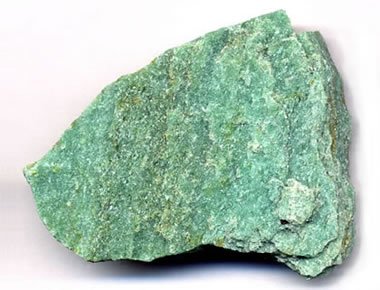
Geologists have used the name “quartzite” in a few different ways, each with a slightly different meaning. Today most geologists who use the word “quartzite” are referring to rocks that they believe are metamorphic and composed almost entirely of quartz.
A few geologists use the word “quartzite” for sedimentary rocks that have an exceptionally high quartz content. This usage is falling out of favor but remains in older textbooks and other older publications. The name “quartz arenite” is a more appropriate and less confusing name for these rocks.
It is often difficult or impossible to differentiate quartz arenite from quartzite. The transition of sandstone into quartzite is a gradual process.
A single rock unit such as the Tuscarora Sandstone of the central Appalachians might fully fit the definition of quartzite in the parts of its extent where its quartz grains have been metamorphosed into a durable interlocking mass. It would be better called “sandstone” in other areas.
Between these areas, the names “quartzite” and “sandstone” are used inconsistently and often guided by habit. It is often called “quartzite” when rock units above and below it are clearly sedimentary. This contributes to the inconsistency in the ways that geologists use the word “quartzite.”