Labradorite has become a popular gemstone because of the unique iridescent play-of-color that many specimens exhibit. The quality, hue, and brilliance of the labradorescence varies from one specimen to another and within a single specimen. Stones with exceptional color are often given the name “spectrolite.”
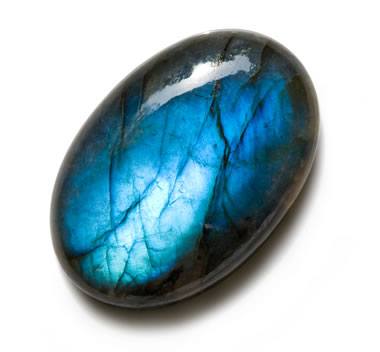
Labradorite is rarely seen in mass-merchant jewelry. Instead it is most often used by designers and jewelers who do unique and custom work.
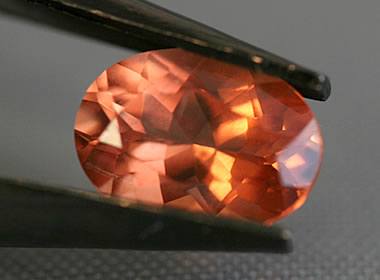
Many specimens of labradorite do not exhibit labradorescence. These materials can still produce beautiful gemstones because of their desirable color or other optical effects such as aventurescence. A beautiful orange piece of labradorite cut as a faceted stone is shown on this page.
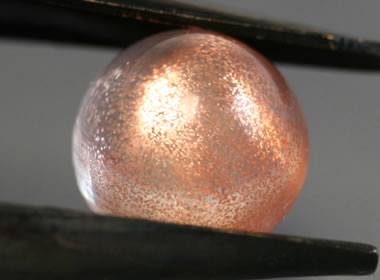
Some specimens of sunstone are labradorite. Sunstone is a plagioclase gemstone in which tiny platelets of copper or another mineral are arranged in a common orientation. These platelets produce a reflective flash when incident light enters the stone at a proper angle relative to the angle of observation.
Some cautions are required when using labradorite as a gemstone. It breaks in two directions with perfect cleavage. This makes it subject to breaking with impact and not a good candidate for jewelry or other objects that could be subject to impact. It also has a hardness of 6 on the Mohs scale. It will therefore scratch much more easily than diamonds, rubies, sapphires, and emeralds, and slightly more easily than jasper and agate.