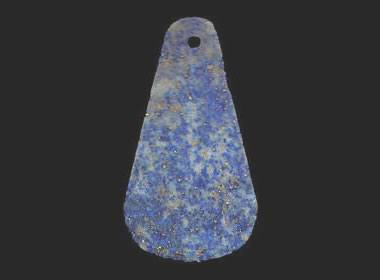
Lapis lazuli has been popular through most of recorded human history. Mining for lapis occurred in the Badakhshan Province of northeastern Afghanistan as early as 7000 BC. The lapis was used to make beads, small jewelry items and small sculptures. These have been found at Neolithic archaeological sites dating back to about 3000 BC in Iraq, Pakistan, and Afghanistan.
Lapis lazuli appears in many Egyptian archaeological sites that date back to about 3000 BC. It was used in many ornamental objects and jewelry. Powdered lapis was used as a cosmetic and a pigment.
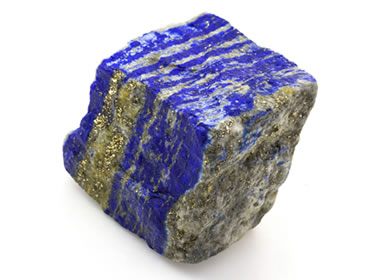
In Biblical times the word “sapphire” was often used as a name for lapis lazuli. For that reason, many scholars believe that at least some of the references to sapphire in the Bible are actually references to lapis lazuli. Some modern translations of the Bible use the word “lapis” instead of “sapphire.”
Lapis lazuli started to be seen in Europe during the Middle Ages. It arrived in the form of jewelry, cutting rough, and finely ground pigment.
Today lapis lazuli is still used in jewelry and ornamental objects. As a pigment it has been replaced with modern materials except by artists who strive to use historical methods.