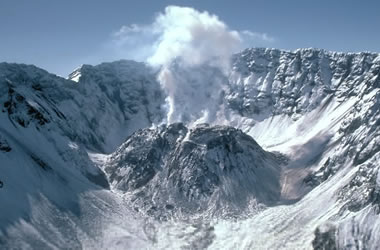
Sluggish rhyolitic lava can slowly exude from a volcano and pile up around the vent. This can produce a mound-shaped structure known as a “lava dome.” Some lava domes have grown to a height of several hundred meters.
Lava domes can be dangerous. As additional magma extrudes, the brittle dome can become highly fractured and unstable. The ground can also change slope as the volcano inflates and contracts. This activity can trigger a dome collapse. A dome collapse can lower the pressure on the extruding magma. This sudden lowering of pressure can result in an explosion. It can also result in a debris avalanche of material falling from the tall collapsing dome. Many pyroclastic flows and volcanic debris avalanches have been triggered by a lava dome collapse.