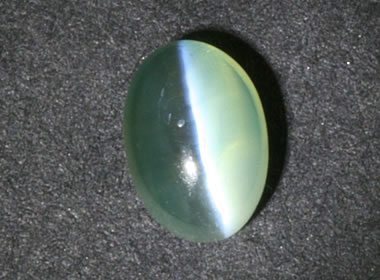
Some gems with a highly developed chatoyance can appear to be made of two different materials when illuminated from the proper direction with respect to the observer’s eye. In these stones, the cat’s-eye will appear to divide the stone into a zone of light-colored material on one side of the eye and dark-colored material on the other. This phenomenon is known as the “milk-and-honey” effect.
Milk-and-Honey Chrysoberyl: Chrysoberyl is the gem that exhibits the finest cat’s-eye. When the term “cat’s-eye” is used without a mineral name as a modifier, the speaker is most likely referring to chrysoberyl. This specimen exhibits the “milk-and-honey” effect – when properly oriented, the stone has two apparently different colors on each side of the cat’s-eye line. This green cat’s-eye chrysoberyl was produced in Sri Lanka and is about 5.6 x 4 millimeters in size. The stone in this photo is the same stone shown in the photo at the top of the page.Cat’s-Eye Aquamarine: Rare translucent aquamarines are known to produce cat’s-eyes, although the eyes are generally not very strong. This greenish blue stone is about 11 x 8 millimeters in size and was cut from material mined in Madagascar.