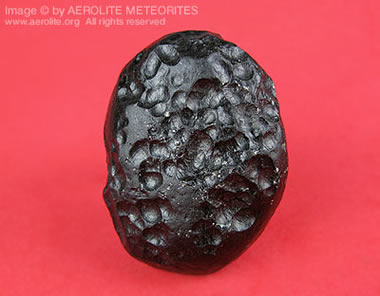
Tektites and moldavites are varieties of natural glass that formed from the impact of an asteroid or comet. These objects struck the Earth at hypervelocity, and the force of their impact produced a tremendous amount of heat energy. The explosion that occurred upon impact flash-melted the target rock and produced a shower of molten material over thousands to millions of square miles. The molten material’s temperature dropped quickly as it flew through the air – so quickly that the melts solidified without forming crystals.
Libyan desert glass is a similar material thought to be caused by an impact in a sandy area. Fulgurite and the associated material known as lechatelierite are produced when lightning strikes the Earth in a sandy environment. These strikes instantly melt the sand, which then rapidly solidifies as amorphous silica. These materials are rapidly cooled glassy mineraloids.