A table above lists the names and chemical compositions for 32 different members of the tourmaline mineral group. These names are based upon the chemical composition of the mineral. Because it can be impossible or impractical to determine the chemical composition of a large number of specimens or even a single specimen, the generic name “tourmaline” is typically used for any mineral in the tourmaline group in the field, the classroom, the office, or even in a laboratory.
Tourmaline is one of the most popular gemstones because it occurs in every color of the spectrum. Jewelers and gemologists use trade names for different colors of tourmaline to simplify communications with their customers. These names work much better in a jewelry store than the mineralogical names in the table above!
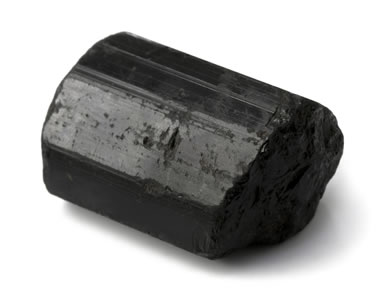
Red tourmaline is sold as “rubellite“. Blue tourmaline is sold as “indicolite“. Green tourmaline colored by chromium or vanadium is often sold as “chrome tourmaline“. Black tourmaline is sold as “schorl“. For other tourmaline colors, the name of the color is usually used as an adjective. For example, “pink tourmaline” or “purple tourmaline.” “Yellow tourmaline” is sometimes sold as “canary tourmaline“. Blue tourmaline is sold as “indicolite“. Green tourmaline colored by chromium or vanadium is often sold as “chrome tourmaline“. Black tourmaline is sold as “schorl“. For other tourmaline colors, the name of the color is usually used as an adjective. For example, “pink tourmaline” or “purple tourmaline.” “Yellow tourmaline” is sometimes sold as “canary tourmaline“. |
“Color names” make the language of tourmaline gems simple for jewelry consumers. If jewelry stores sold tourmaline gems by their scientific names, the chemical composition of each gem would need to be determined to assure that the names used to offer them for sale were absolutely accurate. This would create confusion, waste time and be an enormous expense. Tourmaline might not be very popular if the names challenged consumers – and even jewelers!