Only a small amount of turquoise that is mined today can be used to cut finished stones or make jewelry without some type of treatment. These treatments make the turquoise stable enough for cutting, durable enough for jewelry, or improve its color and marketability.
Untreated turquoise is a rare commodity. The rough, the stones cut from it, and jewelry made from it are special and held in highest regard by many people. Untreated turquoise is hard to find, and lots of people want it for a variety of reasons.
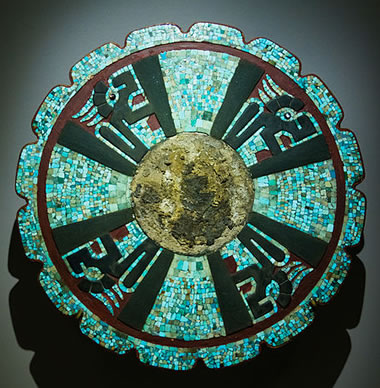
The different types of turquoise, based upon their treatments, are described below. They are listed from top to bottom in order of their desirability.
Natural Untreated Turquoise is the name for turquoise that is fashioned into cabochons, beads or other items and used to manufacture jewelry without any type of treatment. It is the most highly desirable type of turquoise, especially when it has an attractive color. You are most likely to find it for sale in stores that specialize in fine turquoise jewelry, those that sell high-quality one-of-a-kind items, or those that specialize in natural, untreated gems. Sellers of natural untreated turquoise frequently use the fact that no treatment has been done as a selling point.
Stabilized Turquoise is the name used for turquoise that has been impregnated with a polymer or other binding material to make it durable enough for cutting and use in jewelry. Straight from the mine this turquoise is too soft, too porous, too fractured or too fragile for manufacturing. Stabilized turquoise can be cut into beautiful beads and cabochons. It is the most common type of turquoise in today’s gem and jewelry market. It is widely accepted because the supply of natural turquoise is much smaller than the demand from people who want it. The fact that an item is made from stabilized turquoise should always be disclosed to the buyer prior to sale, and the price should be lower than untreated turquoise of similar quality.
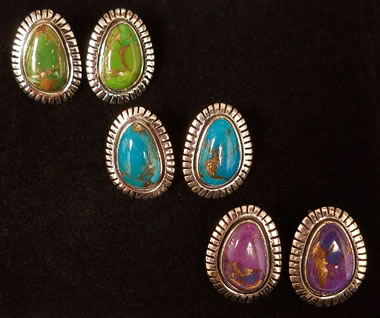
Composite or Reconstituted Turquoise is made from small pieces of turquoise that are mixed with a polymer and cast into block-shaped pieces. Finely crushed turquoise and some non-turquoise materials are sometimes included. The blocks are then sawn into small pieces that are used to cut cabochons, beads and other items. This material is often called “block turquoise” because of this manufacturing method. Sellers who pride themselves on selling only natural gems frequently decline to sell reconstituted turquoise. Some gem identification labs decline to call this material “turquoise” and instead label it as a “man-made product.” At the same time, some vendors are glad to sell these materials and jewelry made from them because they often have an attractive appearance and a low price.
Dyed Turquoise is exactly that. Turquoise is a porous material and easily accepts dye. The dye is used to modify the turquoise to a more marketable color. Dye can also be used to produce an outrageous color. Composite and reconstituted turquoise are the most commonly dyed materials. Dye can be used to color the turquoise or to color the polymer binding material. Sometimes black or brown dye is used to alter the color of matrix material to make it more obvious and uniform. Dyed turquoise is always worth less than untreated material of a similar color and quality.