Labradorite is named after its location of discovery on the Isle of Paul, near Nain, Labrador, Canada. It was discovered there in 1770 by a Moravian missionary.
Labradorite with superb labradorescence is produced from a few deposits in Finland. The best of this material was given the name “spectrolite” by the director of the Geological Survey of Finland. Today, specimens of labradorite with exceptional labradorescence from other locations are frequently called “spectrolite.”
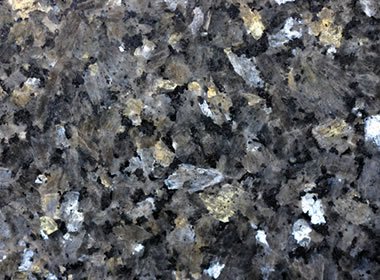
A significant amount of gray to black labradorite with good labradorescence is produced from locations in Madagascar and Russia. Small amounts of transparent labradorite with internal color flash are produced in India.
Several mines in Oregon produce transparent orange, yellow, red, blue, green, and clear labradorite without labradorescence. These can be cut into very nice faceted stones. Some of this material has platy inclusions of copper in a common alignment that can produce an aventurescent flash when played in the light. These materials are marketed under the name “Oregon Sunstone” and have attracted a strong following from local designers and the tourist trade.