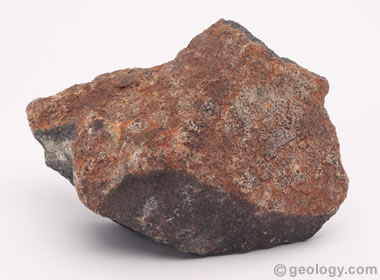
The fine-grained texture of diabase makes identification in the field or in a classroom a difficult undertaking. The observer must have enough skill to view the physical properties of tiny mineral grains, and enough knowledge to identify the minerals. Getting a confident identification in these locations can be difficult.
Diabase is best identified in thin section with a petrographic microscope, with x-ray diffraction, or with other instruments that can identify the component minerals and their relative abundances. So, many people take the easy way out and call the unknown specimen “trap rock” (a layman’s name that fits a number of dark, fine-grained igneous rocks) or take a chance of declaring an incorrect scientific name. When you hear the name “diabase”, you should examine the rock to confirm its identity, if the name of the rock is important.