An ability to positively identify natural diamonds, lab-grown diamonds, and the many imitation materials is essential today for several reasons. First, significant price differences exist between these materials. Second, diamond customers are cautious and want to know exactly what they are buying. And, third, the reputation of every business that sells diamonds is at risk.
Diamond merchants who do not monitor and confirm the identity of inventory coming into their business expose themselves to the risk of financial loss, civil liability, and a loss of reputation. Misidentified merchandise and fraud can enter the supply chain at any level. A barrier for merchants is the high cost of testing equipment. Screening instruments cost thousands of dollars.
Fortunately, both lab-grown and natural diamonds are distinctly different from the many diamond imitations such as cubic zirconia and synthetic moissanite. These imitations differ from lab-grown diamonds and natural diamonds in many ways. They have a completely different chemical composition and a variety of different physical properties. Competent gemologists can easily recognize the imitations. Most jewelry professionals, with training and practice, can separate imitations from natural and synthetic diamonds with a simple testing device that can be purchased for less than $200.
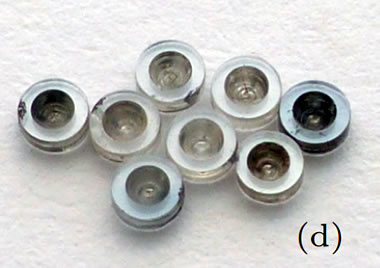
Diamond Lenses: A photograph of concave parabolic diamond x-ray lenses. Diamond lenses for focusing x-ray beams have been in use since the late 1990s.