Spodumene sometimes occurs in transparent crystals in pastel shades of pink, purple, green, and yellow. These have been cut into gemstones that are prized by collectors. However, their use in jewelry is limited to pieces that will be subject to limited abuse because of spodumene’s perfect cleavage.
Kunzite
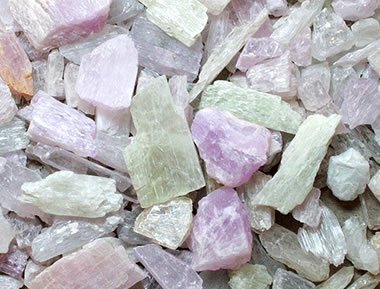
Pink to lilac specimens of gem-quality spodumene are highly prized and known as “kunzite”. The color of these specimens is attributed to the presence of manganese as a chromophore. Kunzite is the most commonly encountered spodumene gem.
Many specimens of kunzite are strongly pleochroic, with the deepest color observed when the gem is viewed down the principal axis. To take full advantage of this phenomenon, gemstones are usually cut with their tables perpendicular to the principal axis to yield stones of the deepest color.
Hiddenite
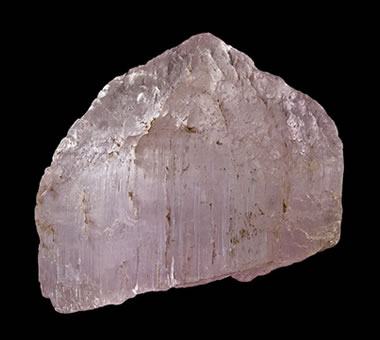
Emerald-green spodumene is known as “Hiddenite.” Its vivid green color is very similar to emerald and is attributed to the presence of chromium as a chromophore. It is the rarest gem variety of spodumene. It was first found near the town of White Plains, North Carolina, which changed its name to “Hiddenite” after the popular gemstone that attracted people to the area.
Triphane
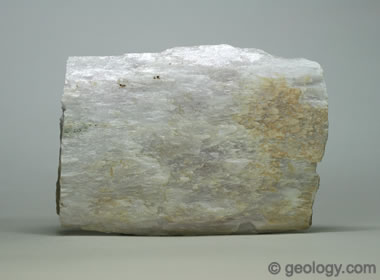
Spodumene rarely occurs in a yellow color. However, some yellow spodumene can be of gem quality, and it has been cut into faceted and cabochon gems. These gems have been given the name “triphane”.
It should be noted that “triphane” is one of the early names used for spodumene. It can be encountered in mineralogical writings from the 1800s and early 1900s. Any use of the word “triphane” from that era is referring to spodumene as a mineral because gemological use of the word did not begin until the late 1900s.