Sugilite was first discovered in 1944. It did not enter the gem and jewelry market until 1979, after commercial quantities of gemstone-quality sugilite were found at the Wessels Mine in South Africa.
Very few jewelry consumers are familiar with sugilite. Why? Because it is a rare mineral, only available in small quantities, has a short commercial history, and has never been heavily promoted.
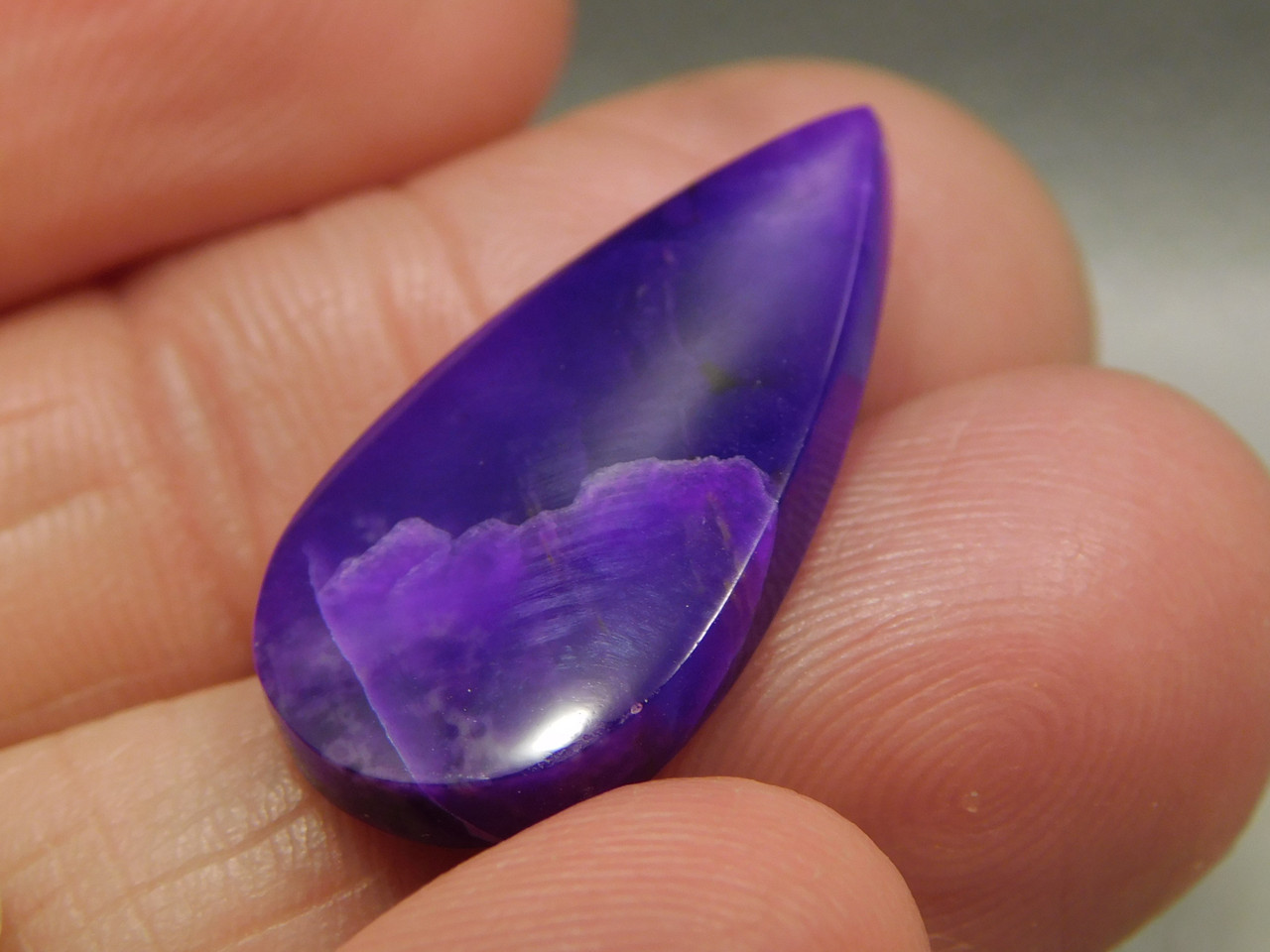
Cabochons, beads, and small sculptures are the most common items made from sugilite. With a Mohs hardness of 5.5 to 6.5, sugilite is best used in pendants, earrings, brooches and other items that are not exposed to abrasion or impact. When used in rings and bracelets, sugilite should be in a mounting that protects it from damage, and the owner should be aware of the fact that it is a fragile gemstone.
The best pieces of solid sugilite are usually found in one-of-a-kind jewelry items. However, increasing amounts of sugilite are starting to appear in the sterling silver and turquoise jewelry that is popular in the southwestern United States. It is often used in inlay designs and as small secondary stones.
Some of the most impressive items made using sugilite are small boxes, desk sets, trays, and jewelry decorated with intarsia designs. The purple color of sugilite creates wonderful color combinations with malachite, turquoise, lapis lazuli, and opal. An article in Gems & Gemology shows nice examples of these projects.

Pieces of sugilite that are too small to cut or below cutting grade are often crushed, mixed with resin, and cast into blocks. The blocks are then cut into slabs and used to cut beads and cabochons. “Block turquoise” is made by a similar process.
Much of the material that is called “sugilite” and used to make jewelry is a natural mixture of sugilite and other minerals, sometimes with sugilite being a minor ingredient. In rocks near where sugilite is found, purple chalcedony with suspended particles of sugilite is sometimes found. This material can be beautiful and is similar to gem silica.