Three types of morganite are present in the gem and jewelry market: natural morganite, synthetic morganite, and imitation morganite. We explain the differences below…
Natural Morganite is gem material that was formed within the Earth by natural processes. It is the most valuable type of morganite and is highly preferred by many buyers. Some people think that natural gems are the only type of gems that they are willing to own and wear.
Synthetic Morganite (also known as lab-grown morganite or lab-created morganite) is a man-made material with the same chemical composition, crystal structure, and physical properties as natural morganite. The important difference is that natural morganite was formed in the Earth and is a rare material. On the other hand, synthetic morganite is a man-made material that can be produced upon demand in unlimited quantities.
Imitation Morganite is a man-made material that simply looks like morganite. It is not rare and generally sells for a price that is much lower than natural morganite or synthetic morganite. Many people gladly purchase imitation gems because they look great and cost a fraction of what would be paid for a natural gem.
Morganite’s recent surge in popularity should be a caution flag for people who are buying morganite jewelry. This is the perfect time for synthetic morganite and imitation morganite to flow into the gem and jewelry market.
If you are going to spend major money on an item of morganite jewelry, it is important to know if the gem you are buying is natural or man-made. Why? Natural morganite sells for a much higher price than man-made alternatives. You don’t want to pay the price of a natural gem and take home a man-made alternative. There is nothing wrong with purchasing a man-made material, if the seller discloses to you that it is man-made, you understand that it is man-made, and you are satisfied with buying a man-made material.
If you have any doubts about a gem, it can be sent to a gemological laboratory for grading and identification. This can usually be done for a cost that is very small compared to the value of the gem.
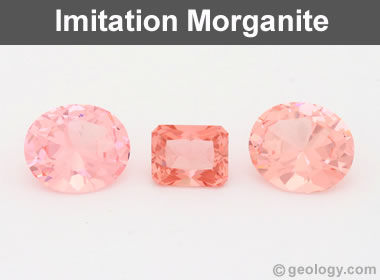
Imitation Morganite: These gems are cut from Nanosital, a man-made glass-ceramic that can be produced in a rainbow of colors. From left to right: a pink-colored 14 x 12 millimeter oval; a salmon-colored 10 x 8 millimeter rectangle; a peach-colored 14 x 12 millimeter oval. These man-made materials have a spectacular appearance.